Public Health

How many people get long COVID More than half - شیوع بالای کووید طولانی

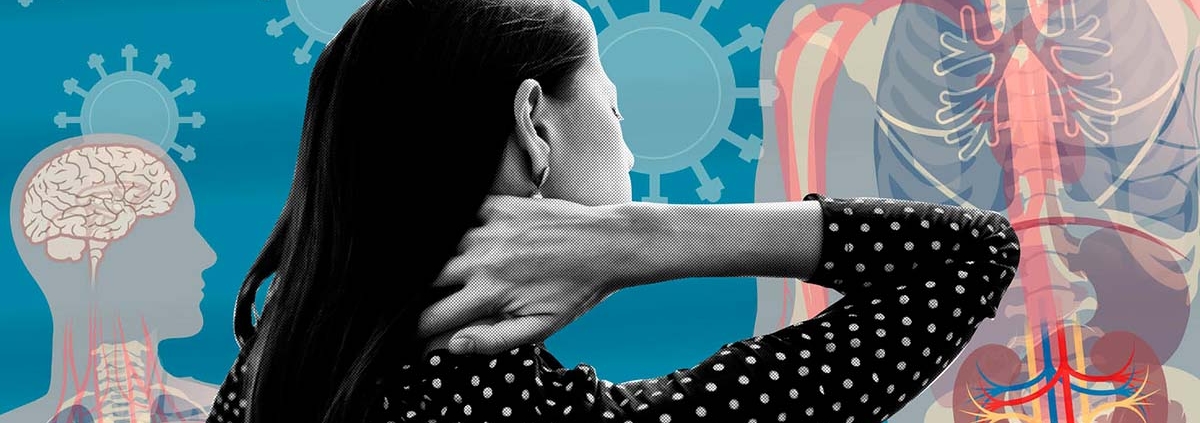
More than half of the 236 million people who have been diagnosed with COVID-19 worldwide since December 2019 will experience post-COVID symptoms — more commonly known as “long COVID” — up to six months after recovering, according to Penn State College of Medicine researchers. The research team said that governments, health care organizations and public health professionals should prepare for the large number of COVID-19 survivors who will need care for a variety of psychological and physical symptoms.

During their illnesses, many patients with COVID-19 experience symptoms, such as tiredness, difficulty breathing, chest pain, sore joints and loss of taste or smell.

Until recently, few studies have evaluated patients’ health after recovering from the coronavirus. To better understand the short- and long-term health effects of the virus, the researchers examined worldwide studies involving unvaccinated patients who recovered from COVID-19. According to the findings, adults, as well as children, can experience several adverse health issues for six months or longer after recovering from COVID-19.

The researchers conducted a systematic review of 57 reports that included data from 250,351 unvaccinated adults and children who were diagnosed with COVID-19 from December 2019 through March 2021. Among those studied, 79% were hospitalized, and most patients (79%) lived in high-income countries. Patients’ median age was 54, and the majority of individuals (56%) were male.

The researchers analyzed patients’ health post-COVID during three intervals at one month (short-term), two to five months (intermediate-term) and six or more months (long-term).

According to the findings, survivors experienced an array of residual health issues associated with COVID-19. Generally, these complications affected a patient’s general well-being, their mobility or organ systems. Overall, one in two survivors experienced long-term COVID manifestations. The rates remained largely constant from one month through six or more months after their initial illness.

The investigators noted several trends among survivors, such as:

  • General well-being: More than half of all patients reported weight loss, fatigue, fever or pain.
  • Mobility: Roughly one in five survivors experienced a decrease in mobility.
  • Neurologic concerns: Nearly one in four survivors experienced difficulty concentrating.
  • Mental health disorders: Nearly one in three patients were diagnosed with generalized anxiety disorders.
  • Lung abnormalities: Six in ten survivors had chest imaging abnormality and more than a quarter of patients had difficulty breathing.
  • Cardiovascular issues: Chest pain and palpitations were among the commonly reported conditions.
  • Skin conditions: Nearly one in five patients experienced hair loss or rashes.
  • Digestive issues: Stomach pain, lack of appetite, diarrhea and vomiting were among the commonly reported conditions.

Release date: 13 October 2021
Source: Penn State

Warm milk makes you sleepy - نکته ای ساده برای خواب بهتر

According to time-honored advice, drinking a glass of warm milk at bedtime will encourage a good night’s rest. Milk’s sleep-enhancing properties are commonly ascribed to tryptophan, but scientists have also discovered a mixture of milk peptides, called casein tryptic hydrolysate (CTH), that relieves stress and enhances sleep. Now, researchers reporting in ACS’ Journal of Agricultural and Food Chemistry have identified specific peptides in CTH that might someday be used in new, natural sleep remedies.

According to the U.S. Centers for Disease Control and Prevention, one-third of U.S. adults don’t get enough sleep. Sedatives, such as benzodiazepines and zolpidem, are commonly prescribed for insomnia, but they can cause side effects, and people can become addicted to them. Many sedatives work by activating the GABA receptor, a protein in the brain that suppresses nerve signaling. Scientists have also discovered several natural peptides, or small pieces of proteins, that bind the GABA receptor and have anti-anxiety and sleep-enhancing effects. For example, treating a protein in cow’s milk, called casein, with the digestive enzyme trypsin produces the mixture of sleep-enhancing peptides known as CTH. Within this mixture, a specific peptide known as α-casozepine (α-CZP) has been identified that could be responsible for some of these effects. Lin Zheng, Mouming Zhao and colleagues wondered if they could find other, perhaps more powerful, sleep-enhancing peptides in CTH.

Release date: 13 October 2021
Source: American Chemical Society

COVID-19-Related Parenting Stress Impacted Eating Habits of Children - تاثیر همه گیری کرونا بر تغذیه کودکان

The incredible stress parents experienced during the COVID-19 pandemic had a negative effect on the eating habits of their children, according to a new study by researchers at the University of Houston College of Education.

When stay-at-home mandates were ordered and school went virtual at the onset of the pandemic, many parents suddenly had to juggle multiple roles such as caregiver, employee and educator. Leslie Frankel, associate professor of human development and family studies, said all those responsibilities took a toll on parents’ mental health, and in turn, what and how much their children were consuming.

Previous research has shown that stress in general is known to have a negative impact on parent-child feeding interactions, but new findings published in the journal Current Psychology reveal COVID-19 only magnified the problem.

Release date: 12 October 2021
Source: University of Houston

Mushroom consumption may lower risk of depression - خاصیت ضدافسردگی قارچ

Mushrooms have been making headlines due to their many health advantages. Not only do they lower one’s risk of cancer and premature death, but new research led by Penn State College of Medicine also reveals that these superfoods may benefit a person’s mental health.

Penn State researchers used data on diet and mental health collected from more than 24,000 U.S. adults between 2005 and 2016. They found that people who ate mushrooms had lower odds of having depression.

According to the researchers, mushrooms contain ergothioneine, an antioxidant that may protect against cell and tissue damage in the body. Studies have shown that antioxidants help prevent several mental illnesses, such as schizophrenia, bipolar disorder and depression.

Read the full study in the Journal of Affective Disorders.

Release date: 14 October 2021
Source: Penn State

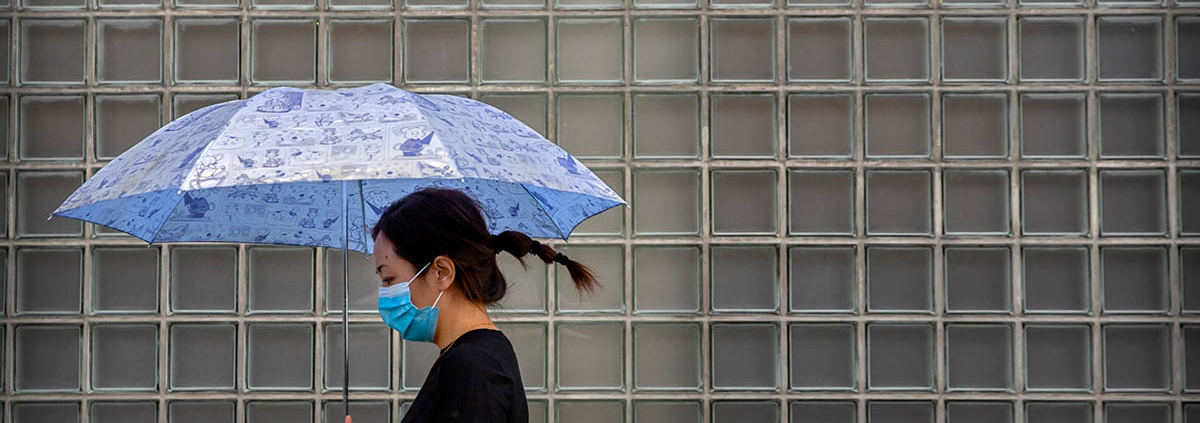
As the highly infectious delta variant of the coronavirus continues to spread across the United States, guidelines from the Centers for Disease Control and Prevention recommend even the vaccinated wear masks indoors to prevent exposure and transmission. However, it is less clear what people should do when outside.

In Physics of Fluids, by AIP Publishing, researchers from the Indian Institute of Technology Bombay found when a person coughs outdoors, wind flowing in the same direction can propagate the virus faster over longer distances than in calm conditions.

Other guidelines, such as coughing in an elbow or turning the face away while coughing, should be followed to reduce transmission when socializing outdoors.

Most studies model cough flow using puffs of air or a simple pulsating profile. But a real cough is more complicated, exhibiting turbulent flow with prominent vortical structures swirling like mini whirlpools.

To investigate these vortices, the researchers used a large eddy simulation, a numerical model in computational fluid dynamics that simulates turbulence. They modeled cough jets in breezy conditions and in calm conditions representing a typical indoor environment.

These simulations show even a light breeze of about 5 mph extends effective social distancing by around 20%, from 3-6 feet to 3.6-7.2 feet, depending on cough strength. At 9-11 mph, spreading of the virus increases in distance and duration.

The researchers found the vortices enable bigger droplets to persist in the air longer than has been typically assumed, increasing the time it takes to adequately dilute the viral load in fresh air. As the cough jet evolves and spreads, it interacts with the wind flowing in the same direction, and the bigger infected droplets become trapped in the jet’s vortices instead of falling relatively quickly to the ground under gravity.

Release date: 12 October 2021
Source: American Institute of Physics

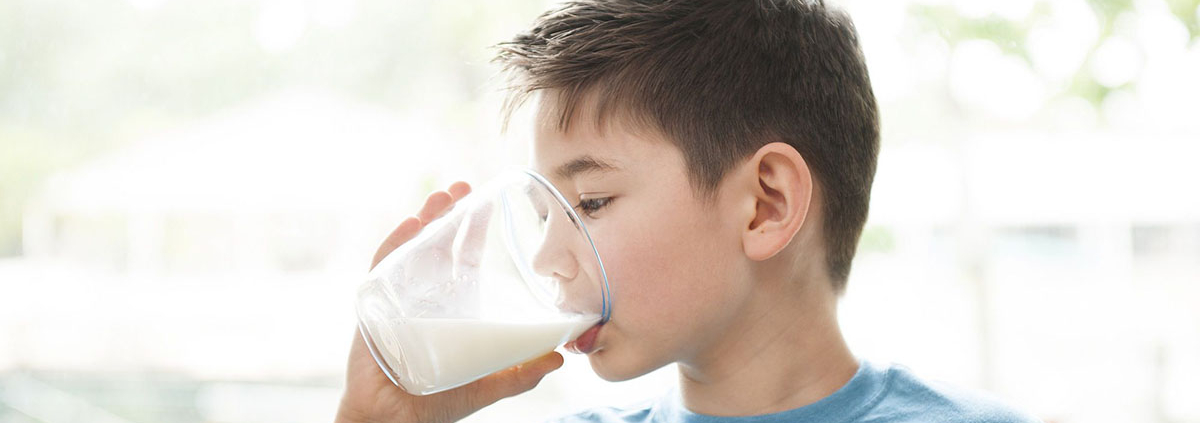
Whole fat or low-fat milk better for kids Science says its udderly up to them - لبنیات مناسب تر برای کودکان کم چرب یا پرچرب

A world-first study shows kids over two years of age can drink whichever they prefer, with no effect on their health.

The research, published by the American Journal of Clinical Nutrition today, suggests current public health advice recommending children over the age of two consume low fat dairy products may need to be revised.

ECU’s Associate Professor Therese O’Sullivan led the investigation into the consumption of full-fat dairy products in children as part of the Milky Way study.

Over a three-month period, 49 healthy children aged four to six were randomly allocated to receive either whole fat or low-fat dairy products in place of their normal dairy intake.

Dairy products were home delivered every fortnight in plain packaging at no cost to the participants, to ensure purchase price wasn’t a factor.

Neither group knew whether they were consuming whole fat or low-fat dairy, while any left over products were weighed each fortnight to assess the children’s overall intake.

Release date: 12 October 2021
Source: Edith Cowan University

Alzheimers and Covid-19 share a genetic risk factor - کرونا و آلزایمر

An anti-viral gene that impacts the risk of both Alzheimer’s disease and severe Covid-19 has been identified by a UCL-led research team.

The researchers estimate that one genetic variant of the OAS1 gene increases the risk of Alzheimer’s disease by about 3-6% in the population as a whole, while related variants on the same gene increase the likelihood of severe Covid-19 outcomes.

The findings, published in Brain, could open the door for new targets for drug development or tracking disease progression in either disease, and suggest that treatments developed could be used for both conditions. The findings also have potential benefits for other related infectious conditions and dementias.

Release date: 08 October 2021
Source: University College London

Medicine & Science in Sports & Exercise

Forget bedrest, research from Edith Cowan University (ECU) has shown exercise may be a key weapon in cancer patients’ battle against the disease.

Exercise causes muscles to secrete proteins called myokines into our blood – and researchers from ECU’s Exercise Medicine Research Institute have learned these myokines can suppress tumour growth and even help actively fight cancerous cells.

A clinical trial saw obese prostate cancer patients undergo regular exercise training for 12 weeks, giving blood samples before and after the exercise program.

Researchers then took the samples and applied them directly onto living prostate cancer cells.

Medicine & Science in Sports & Exercise

Release date: 05 October 2021
Source: Edith Cowan University

COVID-19 Coughing without masks distancing alone is not enough - فاصله گذاری بدون ماسک کم اثر

To prevent the spread of COVID-19 indoors, the two metres physical distancing guideline is not enough without masks, according to researchers from Quebec, Illinois, and Texas. However, wearing a mask indoors can reduce the contamination range of airborne particles by about 67 percent.

“Mask mandates and good ventilation are critically important to curb the spread of more contagious strains of COVID-19, especially during the flu season and winter months as more people socialize indoors,” says Saad Akhtar, a former doctoral student under the supervision of Professor Agus Sasmito at McGill University.

While most public health guidelines recommend physical distancing of two metres for people from different households, the researchers say distancing alone is not enough to prevent the spread of COVID-19. In a study published in Building and Environment, the researchers found that when people are unmasked, more than 70 percent of airborne particles pass the two metres threshold within the 30 seconds. By contrast, less than 1 percent of particles cross the two-metre mark if masks are worn.

Release date: 05 October 2021
Source: McGill University

Income gap can harm childrens achievement in maths but not reading grades - فقر و تحصیلات

Inequalities in income affect how well children do in maths – but not reading, the most comprehensive study of its kind has found.

Looking at data stretching from 1992 to 2019, the analysis, published in the journal Educational Review, revealed that 10-year-olds in US states with bigger gaps in income did less well in maths than those living in areas of America where earnings were more evenly distributed.

With income inequality in the US the highest in the developed world, researcher Professor Joseph Workman argues that addressing social inequality may do more to boost academic achievement than reforming schools or curricula – favoured methods of policymakers.

Income inequality – a measure of how unevenly income is distributed through a population – has long been associated with a host of health and social problems including mental health issues, lack of trust, higher rates of imprisonment and lower rates of social mobility.

It may also affect academic achievement, through various routes.

Release date: 05 October 2021
Source: Taylor & Francis Group