
Public Health

Natural compound in basil may protect against Alzheimers disease pathology - سبزی با خاصیت ضد آلزایمر

Fenchol, a natural compound abundant in some plants including basil, can help protect the brain against Alzheimer’s disease pathology, a preclinical study led by University of South Florida Health (USF Health) researchers suggests.

The new study published in the Frontiers in Aging Neuroscience, discovered a sensing mechanism associated with the gut microbiome that explains how fenchol reduces neurotoxicity in the Alzheimer’s brain.

Emerging evidence indicates that short-chain fatty acids (SCFAs)– metabolites produced by beneficial gut bacteria and the primary source of nutrition for cells in your colon — contribute to brain health. The abundance of SCFAs is often reduced in older patients with mild cognitive impairment and Alzheimer’s disease, the most common form of dementia. However, how this decline in SCFAs contributes to Alzheimer’s disease progression remains largely unknown.

Gut-derived SCFAs that travel through the blood to the brain can bind to and activate free fatty acid receptor 2 (FFAR2), a cell signaling molecule expressed on brain cells called neurons.

“Our study is the first to discover that stimulation of the FFAR2 sensing mechanism by these microbial metabolites (SCFAs) can be beneficial in protecting brain cells against toxic accumulation of the amyloid-beta (Aβ) protein associated with Alzheimer’s disease,” said principal investigator Hariom Yadav, PhD, professor of neurosurgery and brain repair at the USF Health Morsani College of Medicine, where he directs the USF Center for Microbiome Research.

Release date: 05 October 2021
Source: University of South Florida

Those under 40 more likely than older adults to recover COVID-related smell and taste loss - بویایی و کرونا

Ongoing survey tracking smell and taste recovery of COVID-19 survivors shows 4 out of every 5 recover senses within 6 months.

RICHMOND, Va. (October 5, 2021) — Sense of smell or taste returns within six months for 4 out of every 5 COVID-19 survivors who have lost these senses, and those under 40 are more likely to recover these senses than older adults, an ongoing Virginia Commonwealth University study found.

Among 798 respondents to the ongoing COVID-19 smell and taste loss survey who had tested positive for COVID-19 and reported a loss of smell or taste, participants who were younger than 40 recovered their sense of smell at a higher rate than those older than 40, according to study results published in the American Journal of Otolaryngology last month. The VCU study requires survey participants to be 18 years or older.

What symptoms COVID-19 survivors experienced and what pre-existing conditions they had also offered insights into their recovery. Those with a history of head injury were less likely to recover their sense of smell. Recovery was also less likely for those who had shortness of breath during COVID-19. However, those with nasal congestion had a higher likelihood of smell recovery.

Release date: 05 October 2021
Source: Virginia Commonwealth University

Nasal Drugs Show Promise for Slowing Parkinson’s Disease Progression in Lab Study - گامی بلند در درمان پارکینسون

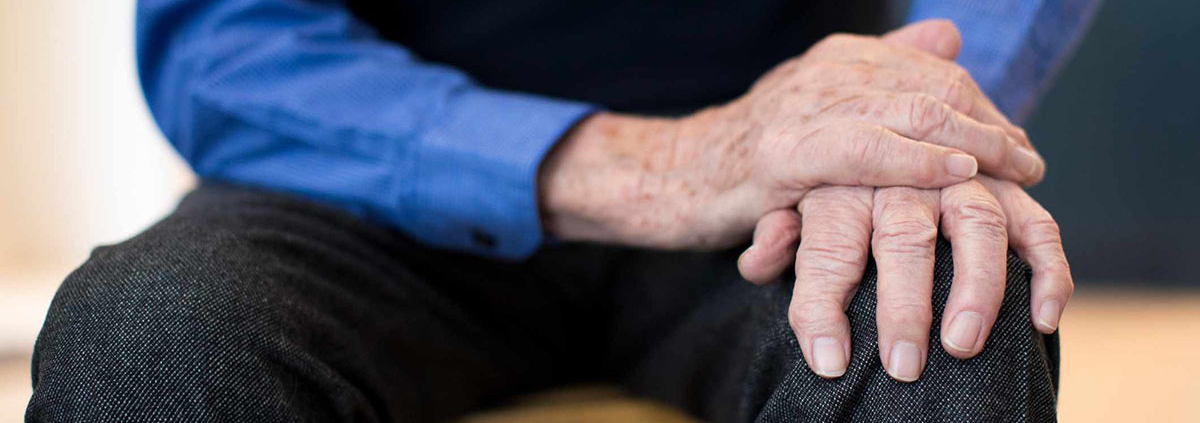
Potential new treatments for Parkinson’s disease developed by researchers at Rush University Medical Center have shown success in slowing progression of the disease in mice.

In a study published in Nature Communications, Rush researchers found that two different peptides (chains of amino acids) helped slow the spread of alpha-synuclein, a protein that occurs in abnormal protein deposits called Lewy bodies in the brain. Lewy bodies are hallmarks of Parkinson’s disease, the most common movement disorder affecting about 1.2 million people in the United States and Canada.

The lab-developed peptides tested in the study are known as TLR2-interacting domain of Myd88 (TIDM) and NEMO-binding domain (NBD). The drugs, which were delivered through the nose, were found to slow inflammation in the brain and stop the spread of alpha-synuclein in mice with Parkinson’s disease. The treatments also improved the mice’s gait, balance, and other motor functions.

Release date: 20 September 2021
Source: Rush University Medical Center

Spouses Really Are Together in Sickness and in Health - این بار همسرتان را هم برای چک آپ ببرید

A couple’s health is surprisingly intertwined according to a recent cohort study that looked at Dutch and Japanese marriages.

The study discovered that spouses have a high degree of commonality in not only lifestyle habits, but body shape, blood pressure, and even incidences of some diseases.

When it comes to marriage, the adage “birds of a feather flock together” is relatively true. Previous studies have indicated that we gravitate towards people of similar social class, educational background, race, and weight. The scientific name for this is assertive mating, and it means that spouses are often genetically similar. This allows researchers to explore environmental factors in greater detail.

Researchers examined 5,391 pairs from Japan and 28,265 from the Netherlands, drawing on data from the Tohoku Medical Megabank Project, and the Lifelines study in the Netherlands.

Journal: Atherosclerosis

Release date: 22 September 2021
Source: Tohoku University

How therapy not pills can nix chronic pain and change the brain - روان درمانی موثرتر از قرص های مسکن

As many as one in five Americans suffer from chronic pain, an often intractable problem that costs the country more than $600 billion in treatments and lost work-time and has helped fuel a deadly opioid epidemic.

But new CU Boulder research, published today in the journal JAMA Psychiatry Original Investigation, provides some of the strongest evidence yet that a non-drug, psychological treatment can provide potent and durable relief.

This study suggests a fundamentally new way to think about both the causes of chronic back pain for many people and the tools that are available to treat that pain. – Sona Dimidjian, Director Renee Crown Wellness Institute

The study found that two-thirds of chronic back pain patients who underwent a four-week psychological treatment called Pain Reprocessing Therapy (PRT) were pain-free or nearly pain-free post-treatment. And most maintained relief for one year. They also showed changes in pain-generating brain regions after therapy.

Release date: 29 September 2021
Source: University of Colorado at Boulder

COVID19 has caused the biggest decrease in life expectancy since World War II - بیشترین کاهش امید به زندگی بعد از جنگ جهانی دوم

The research team assembled an unprecedented dataset on mortality from 29 countries, spanning most of Europe, the US and Chile – countries for which official death registrations for 2020 had been published. They found that 27 of the 29 countries saw reductions in life expectancy in 2020, and at a scale which wiped out years of progress on mortality, according to the paper published today in the International Journal of Epidemiology.

Women in 15 countries and men in 10 countries were found to have a lower expectancy at birth in 2020 than in 2015, a year in which life expectancy was already negatively affected by a significant flu season.

According to the study’s co-lead author Dr José Manuel Aburto, ‘For Western European countries such as Spain, England and Wales, Italy, Belgium, among others, the last time such large magnitudes of declines in life expectancy at birth were observed in a single year was during WW-II.

But, he says, the scale of the life expectancy losses was stark across most countries studied, ‘Twenty two countries included in our study experienced larger losses than half a year in 2020. Females in eight countries and males in 11 countries experienced losses larger than a year. To contextualize, it took on average 5.6 years for these countries to achieve a one-year increase in life expectancy recently: progress wiped out over the course of 2020 by COVID-19.’

Release date: 27 September 2021
Source: University of Oxford

Happiness in Early Adulthood May Protect Against Dementia - شادی و توانمندی شناختی

While research has shown that poor cardiovascular health can damage blood flow to the brain increasing the risk for dementia, a new study led by UC San Francisco indicates that poor mental health may also take its toll on cognition.

The research adds to a body of evidence that links depression with dementia, but while most studies have pointed to its association in later life, the UCSF study shows that depression in early adulthood may lead to lower cognition 10 years later and to cognitive decline in old age.

The study publishes in the Journal of Alzheimer’s Disease.

Release date: 28 September 2021
Source: University of California – San Francisco

Sticking to low fat dairy may not be the only heart healthy option - به لبنیات کم چرب محدود نشویم

New research amongst the world’s biggest consumers of dairy foods has shown that those with higher intakes of dairy fat – measured by levels of fatty acids in the blood – had a lower risk of cardiovascular disease compared to those with low intakes. Higher intakes of dairy fat were not associated with an increased risk of death.

Researchers then combined the results of this study in just over 4,000 Swedish adults with those from 17 similar studies in other countries, creating the most comprehensive evidence to date on the relationship between this more objective measure of dairy fat consumption, risk of cardiovascular disease (CVD) and death.

Dr Matti Marklund from The George Institute for Global Health, Johns Hopkins Bloomberg School of Public Health, and Uppsala University said that with dairy consumption on the rise worldwide, a better understanding of the health impact was needed. PLOS Medicine

Release date: 22 September 2021
Source: George Institute for Global Health

Poorly Circulated Room Air Raises Potential Exposure to Contaminants by up to 6 Times - اهمیت تهویه در کنترل سرایت کرونا

Berkeley Lab experiments quantify the effects of overhead heating on room air mixing with implications for COVID-safe meetings and classrooms. Having good room ventilation to dilute and disperse indoor air pollutants has long been recognized, and with the COVID-19 pandemic its importance has become all the more heightened. But new experiments by indoor air researchers at Lawrence Berkeley National Laboratory (Berkeley Lab) show that certain circumstances will result in poor mixing of room air, meaning airborne contaminants may not be effectively dispersed and removed by building level ventilation.

Using CO2 as a tracer to track small respiratory aerosols that travel with air currents in a room, the Berkeley Lab team found that when overhead vents (or diffusers) are supplying heated air, it created thermally stratified conditions that block the flow of clean air down to the “breathing zone” in the middle height of the room. As a result, even when people are sitting more than 6 feet from each other, some occupants may be exposed to respiratory aerosols from others at a rate 5 to 6 times higher than if the same room were well mixed.

Their study, “Measured influence of overhead HVAC on exposure to airborne contaminants from simulated speaking in a meeting and a classroom,” was published recently in the journal Indoor Air.

Release date: 22 September 2021
Source: DOE/Lawrence Berkeley National Laboratory

Fruit vegetables and exercise can make you happier - تغذیه و شادی

New research led by the University of Kent and University of Reading has found that fruit and vegetable consumption and exercise can increase levels of happiness.

While the link between lifestyle and wellbeing has been previously documented and often used in public health campaigns to encourage healthier diets and exercise, new findings published by the Journal of Happiness Studies show that there is also a positive causation from lifestyle to life satisfaction.

Findings demonstrate that the ability of individuals to delay gratification and apply self-control plays a major role in influencing lifestyle decisions, which in turn has a positive impact on wellbeing. The research also shows that men appear to exercise more, and women eat more fruit and vegetables.

Release date: 26 September 2021
Source: University of Kent