
Public Health

Disrupted sleep is linked to increased risk of death particularly in women - بدخوابی و مرگ زودرس

For the first time, a study has shown a clear link between the frequency and duration of unconscious wakefulness during night-time sleep and an increased risk of dying from diseases of the heart and blood vessels, and death from any cause, particularly in women.

The study of 8001 men and women, which is published in the European Heart Journal, found that women who experienced unconscious wakefulness most often and for longer periods of time had nearly double the risk of dying from cardiovascular disease during an average of between 6 and 11 years’ follow-up, when compared to the risk in general female population. The association was less clear in men, and their risk of cardiovascular death increased by just over a quarter compared to the general male population.

Unconscious wakefulness, also known as cortical arousal, is a normal part of sleep. It occurs spontaneously and is part of the body’s ability to respond to potentially dangerous situations, such as noise or breathing becoming obstructed. Pain, limb movements, trauma, temperature and light can also be triggers.

Release date: 20 April 2021
Source: European Society of Cardiology

Air pollution may affect severity and hospitalization in COVID19 patients - تاثیر منفی آلودگی هوا بر شدت ابتلا به کرونا

Patients who have preexisting respiratory conditions such as asthma or chronic obstructive pulmonary disease (COPD) and live in areas with high levels of air pollution have a greater chance of hospitalization if they contract COVID-19, says a University of Cincinnati researcher.

Particulate matter is very small, small enough to be inhaled deep into the lungs, they cross into the blood and also affect other organ systems. Air pollution as a result of emissions from automobiles, factories or other sources is a generator of particulate matter.

The study’s findings were published online in the scholarly journal Respiratory Medicine .

Release date: 13 April 2021
Source: University of Cincinnati

Differing immune reponses discovered in asymptomatic cases versus those with severe COVID19 - پاسخ متفاوت سیستم ایمنی به کرونا

Using data from the Human Cell Atlas, researchers have identified the differences in immune cells’ response in those who had no symptoms compared to severe symptoms.

The largest study of its type in the UK has identified differences in the immune response to COVID-19, between people with no symptoms, compared to those suffering a more serious reaction to the virus.

Researchers from the Wellcome Sanger Institute, Newcastle University, University College London, University of Cambridge, EMBL’s European Bioinformatics Institute (EMBL-EBI) and their collaborators within the Human Cell Atlas initiative, found raised levels of specific immune cells in asymptomatic people. They also showed people with more serious symptoms had lost these protective cell types, but gained inflammatory cells. These differences in the immune response could help explain serious lung inflammation and blood clotting symptoms, and could be used to identify potential targets for developing therapies.

The research, published in Nature Medicine, is one of the only studies to include people who were asymptomatic. This large-scale collaborative study is part of the Human Cell Atlas* initiative to map every cell type in the human body, to transform our understanding of health, infection and disease.

Release date: 20 April 2021
Source: Wellcome Trust Sanger Institute

Physical inactivity linked to more severe COVID19 infection and death - بی تحرکی و مرگ کرونایی

Surpassed only by advanced age and organ transplant as a risk factor, large study shows. Physical inactivity is linked to more severe COVID-19 infection and a heightened risk of dying from the disease, finds a large US study published online in the British Journal of Sports Medicine.

Patients with COVID-19 who were consistently inactive during the 2 years preceding the pandemic were more likely to be admitted to hospital, to require intensive care, and to die than were patients who had consistently met physical activity guidelines, the findings show.

As a risk factor for severe disease, physical inactivity was surpassed only by advanced age and a history of organ transplant.

Several risk factors for severe COVID-19 infection have been identified, including advanced age, male sex, and certain underlying medical conditions, such as diabetes, obesity, and cardiovascular disease.

But physical inactivity is not one of them, even though it is a well known contributory risk factor for several long term conditions, including those associated with severe COVID-19, point out the researchers.

Release date: 13 April 2021
Source: BMJ

COVID19 in our dust may help predict outbreaks - حضور ویروس کرونا در گرد و خاک

A study done in rooms where COVID-19 patients were isolated shows that the virus’s RNA – part of the genetic material inside a virus – can persist up to a month in dust.

The study did not evaluate whether dust can transmit the virus to humans. It could, however, offer another option for monitoring COVID-19 outbreaks in specific buildings, including nursing homes, offices or schools.

Karen Dannemiller, senior author of the study, has experience studying dust and its relationship to potential hazards like mold and microbes.

The study, published in the journal mSystems, found some of the genetic material at the heart of the virus persists in dust, even though it is likely that the envelope around the virus may break down over time in dust. The envelope – the crown-like spiked sphere that contains the virus’s material – plays an important role in the virus’s transmission to humans.

Release date: 13 April 2021
Source: Ohio State University

Multivits omega3 probiotics vitamin D may lessen risk of positive COVID19 test - مکمل های ضد کرونا
  • But protective effects seen only among women
  • Vitamin C, zinc, and garlic supplements not linked to lower risk

Taking multivitamins, omega-3, probiotics or vitamin D supplements may lessen the risk of testing positive for SARS-CoV-2, the virus responsible for COVID-19 infection–at least among women–indicates a large population study, published online in the journal BMJ Nutrition, Prevention & Health.

But taking any of vitamin C, zinc, or garlic supplements wasn’t associated with a lower risk of testing positive for the virus, the findings show.

There has been plenty of celebrity endorsement of the use of dietary supplements to both ward off and treat COVID-19 infection since the start of the pandemic, note the researchers.

Release date: 19 April 2021
Source: BMJ

Sunlight linked with lower Covid19 deaths - خاصیت ضدکرونایی نور خورشید

Sunnier areas are associated with fewer deaths from Covid-19, an observational study suggests.

Increased exposure to the sun’s rays – specifically UVA – could act as a simple public health intervention if further research establishes it causes a reduction in mortality rates, experts say.

The study found that people living in areas with the highest level of exposure to UVA rays – which makes up 95 per cent of the sun’s UV light – had a lower risk of dying from Covid-19 compared with those with lower levels. The analysis was repeated in England and Italy with the same results.

The researchers took into account factors known to be associated with increased exposure to the virus and risk of death such as age, ethnicity, socioeconomic status, population density, air pollution, temperature and levels of infection in local areas.

The observed reduction in risk of death from Covid-19 could not be explained by higher levels of vitamin D, the experts said. Only areas, with insufficient levels of UVB to produce significant vitamin D in the body, were included in the study.

Release date: 13 April 2021
Source: University of Edinburgh

Leisure physical activity is linked with health benefits but work activity is not - نوع فعالیت بدنی مناسب برای سلامتی

The first large study showing that leisure time physical activity and occupational physical activity have opposite, and independent, associations with cardiovascular disease risk and longevity is published today in European Heart Journal , a journal of the European Society of Cardiology (ESC)

Release date: 09 April 2021
Source: European Society of Cardiology
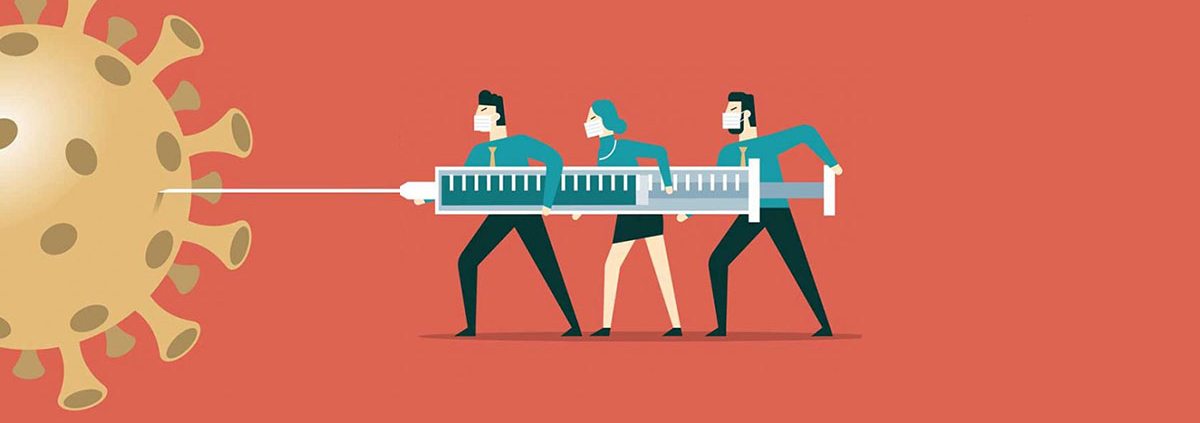
Fit Matters Most When Double Masking to Protect Yourself from COVID19 - محافظت با دو ماسک

A study published in JAMA Internal Medicine shows that wearing two face coverings can nearly double the effectiveness of filtering out SARS-CoV-2-sized particles, preventing them from reaching the wearer’s nose and mouth and causing COVID-19. The reason for the enhanced filtration isn’t so much adding layers of cloth, but eliminating any gaps or poor-fitting areas of a mask.

To test the fitted filtration efficiency (FFE) of a range of masks, UNC researchers worked with James Samet, PhD, and colleagues in the USEPA Human Studies Facility on the campus of UNC-Chapel Hill. There they filled a 10-foot by 10-foot stainless-steel exposure chamber with small salt particle aerosols, and had researchers don combinations of masks to test how effective they were at keeping particles out of their breathing space.

Each individual mask or layered mask combination was fitted with a metal sample port, which was attached to tubing in the exposure chamber that measured the concentration of particles entering the breathing space underneath the researcher’s mask. A second tube measured the ambient concentration of particles in the chamber. By measuring particle concentration in the breathing space underneath the mask compared to that in the chamber, researchers determined the FFE.

Release date: 16 April 2021
Source: University of North Carolina Health Care

Research identifies gender bias in estimation of patients pain - تبعیض جنسیتی در تخمین احساس درد بیماران

A new study suggests that when men and women express the same amount of hurt, women’s pain is considered less intense based on stereotypes.

According to “Gender biases in estimation of others’ pain,” when male and female patients expressed the same amount of pain, observers viewed female patients’ pain as less intense and more likely to benefit from psychotherapy versus medication as compared to men’s pain, exposing a significant patient gender bias that could lead to disparities in treatments. The Journal of Pain

Release date: 06 April 2021
Source: University of Miami