
Public Health

Simpler and reliable ALS diagnosis with blood tests - تشخیص ساده تر بیمار آ ال اس

Blood tests may enable more accurate diagnosis of ALS at an earlier stage of the disease. As described in a study by researchers at University of Gothenburg and Umeå University, it involves measuring the blood level of a substance that, as they have also shown, varies in concentration depending on which variant of ALS the patient has.

Currently, it is difficult to diagnose amyotrophic lateral sclerosis (ALS), the most common form of motor neuron disease, early in the course of the disease. Even after a prolonged investigation, there is a risk of misdiagnosis due to other diseases that may resemble ALS in early stages. Much would be gained from earlier correct diagnosis and, according to the researchers, the current findings look promising.

Neurofilaments — proteins with a special role in the cells and fibers of nerves — are the substances of interest. When the nervous system is damaged, neurofilaments leak into the cerebrospinal fluid (CSF) and in lower concetrations in blood compared to CSF. In their study, scientists at Umeå University and the University Hospital of Umeå, as well as at the University of Gothenburg and Sahlgrenska University Hospital in Gothenburg, demonstrated that CSF and blood levels of neurofilaments can differentiate ALS from other diseases that may resemble early ALS.

The study, published in Scientific Reports.

Release date: 26 January 2022
Source: University of Gothenburg

cardiovascular risk of consuming small quantities of alcohol - خطرات الکل برای سلامت

Drinking less than the UK’s recommended limit of 14 units of alcohol per week still increases the risk of cardiovascular issues such as heart and cerebrovascular disease, according to new research published in the journal Clinical Nutrition.

The sample included 333,259 people who drank alcohol. Participants had been asked about their overall weekly alcohol intake and their intake of specific types of alcohol including beer, wine and spirits. Those participants were followed up for a median of approximately seven years, capturing all incidences where patients had been hospitalised through cardiovascular events.

Anyone who had suffered a previous cardiovascular event was excluded from the analysis, as were former drinkers or those who had not completed information on alcohol intake.

The analysis found that, for those participants that drank less than 14 units of alcohol per week – the limit recommended by the UK’s Chief Medical Officers – each additional 1.5 pints of beer at 4% strength (alcohol by volume) is associated with a 23% increased risk of suffering a cardiovascular event.

The authors argue that biases in existing epidemiological evidence have resulted in the widespread acceptance of the “J-shaped curve” that wrongly suggests low to moderate alcohol consumption can be beneficial to cardiovascular health.

These biases include using non-drinkers as a reference group when many do not drink for reasons of existing poor health, pooling of all drink types when determining the alcohol intake of a study population, and embedding the lower risk observed of coronary artery disease among wine drinkers, potentially distorting the overall cardiovascular risk from the drink.

Release date: 28 January 2022
Source: Anglia Ruskin University

Meat Multiple Sclerosis and the Microbiome - گوشت قرمز و ام اس

Studying the connections between meat, gut bacteria, and autoimmune attacks on the nervous system. Eating more meat, having less of certain bacteria in the gut, and more of certain immune cells in the blood, all link with multiple sclerosis, reports a team of researchers led by UConn Health and the Washington University School of Medicine. The work, published in issue of EBioMedicine, teased out subtle connections that could lead to a better understanding of the causes of the disease.

Multiple sclerosis (MS) is an autoimmune disease affecting fewer than 3 million people worldwide but costing $28 billion annually in the US alone—and untold suffering. MS is more prevalent in specific regions, particularly the northern mid-latitudes, suggesting that geography is somehow linked to the disease, perhaps involving diet. But teasing out the exact relationships between diet, immune response, and MS has been difficult. MS is most obviously an autoimmune disease in which the body attacks the insulation surrounding its nerves. When the insulation is damaged enough, the nerves begin to misfire and malfunction like wires with frayed insulation. But what triggers the body to attack the insulation in the nervous system in the first place is unknown.

More and more evidence has suggested that bacteria might be involved. The bacteria living in our guts can affect our immune system. And what we eat can affect the bacteria in our guts. Dr. Yanjiao Zhou at UConn Health School of Medicine collaborated with Dr. Laura Piccio from Washington University and now at the University of Sydney to study the gut microbiome, immune systems, diet, and blood metabolites in 49 volunteers—25 MS patients and 24 healthy controls—to look for correlations that might be subtle but important.

The strongest systemic linkage the researchers found involved eating meat. Their analysis linked higher meat consumption to a decrease in the population of Bacteroides thetaiotaomicron in people’s gut ecology. B. thetaiotaomicron is associated with digesting carbohydrates from vegetables.

Higher meat consumption, which was observed in the MS patients, was also linked to an increase in T-helper 17 cells in the immune system, and an increase in S-adenosyl-L-methionine (SAM) in their blood.

The relationship between meat-eating and disability and the other factors was not deterministic; some healthy people eat a lot of meat. But the pattern of all the factors was suggestive that, in MS, something goes wrong with people’s gut bacteria that dissociates them from the immune system, leading to heightened T-helper 17 cells and autoimmune attacks on the nervous system. And it tends to be associated with eating meat.

Release date: 27 January 2022
Source: University of Connecticut

A Rutgers study has detected tiny airborne particles containing RNA from the SARS-CoV-2 that causes COVID-19, both inside and outside of the rooms in which infected people were self-isolating at home. This finding suggests that airborne transmission beyond the isolation rooms in homes may pose a risk of infection to other home occupants.

The study, published in the journal Annals of the American Thoracic Society, is the first report of household air contamination with SARS-CoV2 RNA under typical daily living conditions when a household member is infected. Airborne transmission in crowded living conditions may be one reason for higher rates of COVID-19 infection among people with lower incomes.

“Risk of infection from larger respiratory droplets that rapidly settle onto surfaces, typically within two meters of the source, can be reduced by hand-washing, social distancing and face masks, but the tiny respiratory particles that stay suspended in air for hours, require air filtration, ventilation or better masks for prevention,” said lead author Howard Kipen.

The researchers collected air samples from 11 homes in rooms where a newly infected person was isolating, as well as in an adjacent common room to test for the presence of three SARS-CoV-2–specific genes in airborne particles. The researchers found positive air samples for at least one of three virus genes in six of the 11 isolation rooms and in six of the nine common rooms. Seven of these nine homes reported no other cases in the home.

To better understand how the virus spreads in the home, participants were asked to record their time in the isolation room and the common room. “We discovered that many did not strictly adhere to self-isolation, with eight of the 11 infected study participants reporting spending from a few hours to 14 hours in the common room and five of 11 participants reporting spending time in other areas of the home,” Kipen said. Additionally, in four of the homes other residents were also positive or had symptoms.

Release date: 27 January 2022
Source: Rutgers University

Predicting Long COVID At Initial Point of COVID 19 Diagnosis - پیش بینی کووید طولانی

An ISB-led study has identified several factors that can predict if a patient is likely to develop long COVID. In this video, three of the paper’s authors – Dr. Jim Heath, Dr. Yapeng Su and Daniel Chen – discuss some of the implications of their work.

A significant portion of people who contract the SARS-CoV-2 virus – some estimates suggest more than 40 percent – suffer chronic effects known as Post Acute Sequelae of COVID-19 (PASC), commonly referred to as long COVID. PASC symptoms include fatigue, brain fog, the loss of taste and smell, shortness of breath, and more.

Now, researchers have identified several factors that can be measured at the initial point of COVID-19 diagnosis that anticipate if a patient is likely to develop long COVID. These “PASC factors” are the presence of certain autoantibodies, pre-existing Type 2 diabetes, SARS-CoV-2 RNA levels in the blood, and Epstein-Barr virus DNA levels in blood.

Additionally, researchers found that mild cases of COVID-19, not just severe cases, are associated with long COVID. They also suggest that administering antivirals very early in the disease course may potentially prevent some PASC.

“Long COVID is causing significant morbidity in survivors of COVID-19, yet the pathobiology is poorly understood,” said Dr. Jason Goldman, co-corresponding author of the paper and an infectious disease expert at Swedish. “Our study pairs clinical data and patient-reported outcomes with deep multi-omic analyses to unravel important biological associations that occur in patients with PASC. Certain findings such as the low cortisol state in patients with long COVID have potential to translate rapidly to the clinic. Our results form an important foundation for the development of therapeutics to treat long COVID.”


Published research paper in Cell.

Release date: 25 January 2022
Source: Institute for Systems Biology

AI can identify heart disease from an eye scan - چشم آیینه بیماری های قلب

Scientists have developed an artificial intelligence system that can analyse eye scans taken during a routine visit to an optician or eye clinic and identify patients at a high risk of a heart attack.

Doctors have recognised that changes to the tiny blood vessels in the retina are indicators of broader vascular disease, including problems with the heart.

In the research, led by the University of Leeds, deep learning techniques were used to train an AI system to automatically read retinal scans and identify those people who, over the following year, were likely to have a heart attack.

Deep learning is a complex series of algorithms that enable computers to identify patterns in data and to make predictions.

Writing in the journal Nature Machine Intelligence , the researchers report in their paper – Predicting Infarction through your retinal scans and minimal personal Information – that the AI system had an accuracy of between 70% and 80% and could be used as a second referral mechanism for in-depth cardiovascular examination.

The use of deep learning in the analysis of retinal scans could revolutionise the way patients are regularly screened for signs of heart disease.

Release date: 25 January 2022
Source: University of Leeds

Ultrasound Stimulation as an Effective Therapy for Alzheimers Disease - امواج فراصوت درمان جدید آلزایمر

Synchronizing one’s brainwaves to ultrasound pulses could reduce the accumulation of abnormal proteins characteristic of the onset of Alzheimer’s diseaseAlzheimer’s disease affects over 50 million people worldwide and is presently incurable. A viable treatment strategy involves reducing abnormal protein accumulation in the brain with gamma waves. However, studies validating its therapeutic effects using non-focused ultrasound with gamma entrainment are lacking. Now, scientists from the Gwangju Institute of Science and Technology demonstrate reduced protein accumulation in the brain by synchronizing brain waves to external ultrasound pulses at gamma frequency, opening doors to a non-invasive therapy.With the increase in average life expectancy in many parts of the world, certain age-related diseases have become more common. Alzheimer’s disease (AD), unfortunately, is one of them, being extremely prevalent within aging societies in Japan, Korea, and various European countries. Currently there is no cure or an effective strategy to slow down the progression of AD. As a result, it causes much suffering to patients, families, and caregivers as well as a massive economic burden. Fortunately, a recent study by a team of scientists at the Gwangju Institute of Science and Technology (GIST) in Korea has just demonstrated that there might be a way to combat AD by using“ultrasound-based gamma entrainment,” a technique that involves syncing up a person’s (or an animal’s) brain waves above 30 Hz (called “gamma waves”) with an external oscillation of a given frequency. The process happens naturally by exposing a subject to a repetitive stimulus, such as sound, light, or mechanical vibrations.Previous studies on mice have shown that gamma entrainment could fight off the formation of β-amyloid plaques and tau protein accumulations—a standard hallmark of the onset of AD. In this recent paper, which was published in Translational Neurodegeneration, the GIST team demonstrated that it is possible to realize gamma entrainment by applying ultrasound pulses at 40 Hz, i.e., in the gamma frequency band, into the brain of an AD-model mice.

Release date: 20 January 2022
Source: GIST (Gwangju Institute of Science and Technology)

COVID19 Vaccines Dont Cause Infertility or Harm Pregnancy Chances - تاثیر واکسن کرونا بر باروری مردان

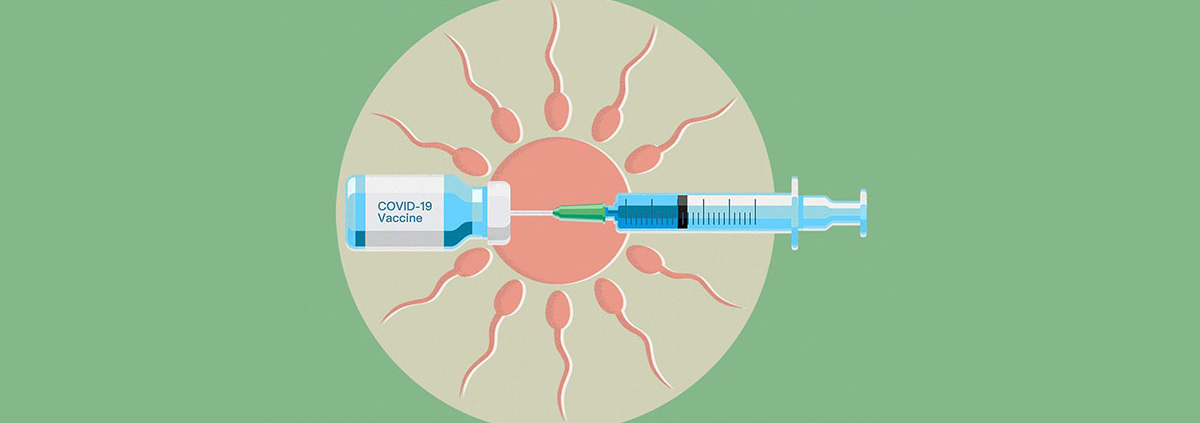
Having a COVID-19 vaccine doesn’t impact a couple’s chances of becoming pregnant—but skipping the shots and landing a coronavirus infection might reduce male fertility.

Those are the findings in a paper published in the American Journal of Epidemiology by researchers at the Boston University School of Public Health. In a study of couples trying to conceive, they found no association between COVID-19 vaccination and the likelihood of conception in female or male partners who received the Pfizer-BioNTech, Moderna, or Johnson & Johnson vaccines.

While COVID-19 infection was not strongly associated with fertility, men who tested positive for COVID within 60 days of a given cycle had reduced fertility compared to men who never tested positive, or men who tested positive at least 60 days prior.

Release date: 20 January 2022
Source: Boston University School of Medicine

Robot performs first laparoscopic surgery without human help - انجام اولین عمل جراحی روباتی مستقل

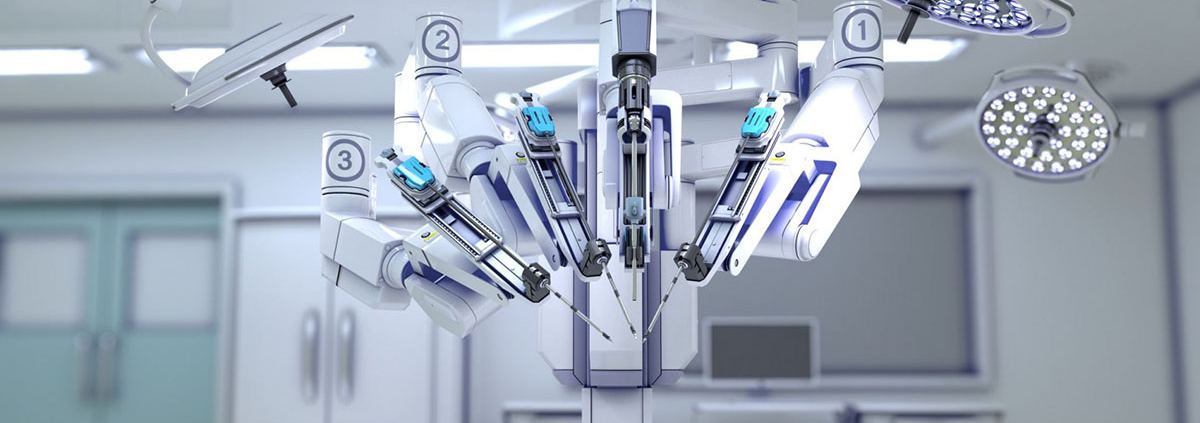
In four experiments on pig tissues, the robot excelled at suturing two ends of intestine—one of the most intricate and delicate tasks in abdominal surgery.

A robot has performed laparoscopic surgery on the soft tissue of a pig without the guiding hand of a human—a significant step toward fully automated surgery on humans. Designed by a team of Johns Hopkins University researchers, the Smart Tissue Autonomous Robot, or STAR, is described today in Science Robotics.

The robot excelled at intestinal anastomosis, a procedure that requires a high level of repetitive motion and precision. Connecting two ends of an intestine is arguably the most challenging step in gastrointestinal surgery, requiring a surgeon to suture with high accuracy and consistency. Even the slightest hand tremor or misplaced stitch can result in a leak that could have catastrophic complications for the patient.

new features for enhanced autonomy and improved surgical precision, including specialized suturing tools and state-of-the art imaging systems that provide more accurate visualizations of the surgical field.

Soft-tissue surgery is especially hard for robots because of its unpredictability, forcing them to be able to adapt quickly to handle unexpected obstacles, Krieger said. The STAR has a novel control system that can adjust the surgical plan in real time, just as a human surgeon would.

Release date: 26 January 2022
Source: Johns Hopkins University

Athletes warned against potential dangers of natural supplements - خطرات بالقوه مصرف مکمل های تغذیه ای

Nutritional supplements taken to boost athletic performance can pose risks to the heart, according to a European Association of Preventive Cardiology statement published today in the European Journal of Preventive Cardiology, a journal of the ESC.1

“Nutritional supplements are commonly viewed as risk-free substances that may improve performance,” states the paper. “Some nutritional supplements, including various plant and ‘natural’ extracts, may pose a serious health risk and athletes may even risk contravening anti-doping rules.”

“Athletes who use supplements often have no knowledge regarding their effects on sports performance and overall health,” continues the document. “It is reported that most athletes get nutritional advice from coaches, fellow athletes, family members and friends, suggesting that more wide reaching educational interventions, at an early age, are necessary.”

Key points for athletes using nutritional supplements:

  • A natural supplement is not necessarily a safe supplement.
  • Use products by established manufacturers with known good quality standards.
  • Athletes are personally responsible for any substances they consume.
  • Ignorance is not accepted as an excuse in relation to a positive doping test.

The position paper outlines the cardiovascular effects during sports of doping substances, prescribed and over-the-counter medicines, legal performance-enhancing supplements, and experimental drugs.

Doping refers to the use of a substance or method which is potentially dangerous to athletes’ health or capable of enhancing their performance. To take one example, death among athletes doping with

anabolic androgenic steroids is estimated to be 6–20 times higher than in clean athletes, and around 30% of these deaths can be attributed to cardiovascular causes.

The World Anti-Doping Agency (WADA) maintains a list of prohibited drugs, but nutritional substances are not included since many are unregulated and unlicensed. The use of legal supplements by athletes varies between 40% and 100% depending on the sport and level of competition. Intended to enhance performance and give a competitive edge, legal supplements include caffeine, creatine, energy drinks/gels/bars, beetroot juice, and proteins.

“Caffeine is a prime example of a natural substance that is considered safe,” said first author Dr. Paolo Emilio Adami of World Athletics, the global governing body for track and field. “While caffeine improves performance, particularly aerobic capacity in endurance athletes, its abuse may lead to fast heart rate (tachycardia), heart rhythm disorders (arrhythmias), high blood pressure, and in some cases sudden cardiac death.”

Release date: 27 January 2022
Source: European Society of Cardiology