Public Health

Cancer cells eat themselves to survive - خودخوری سلول های سرطانی

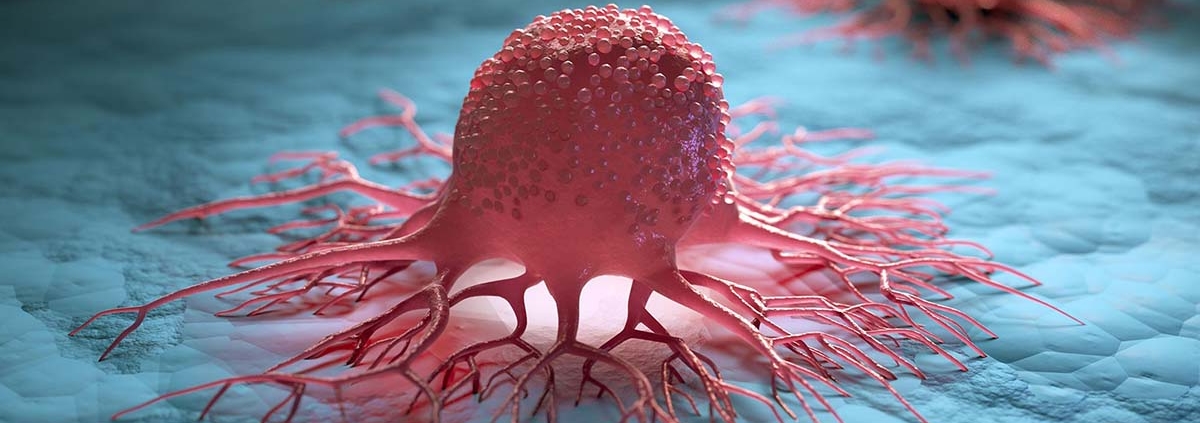
To survive life threatening injuries, cancer cells use a technique in which they eat parts of the membrane surrounding them. This is shown for the first time in research from a team of Danish researchers.

It is the membrane of cancer cells that is at the focus of the new research now showing a completely new way in which cancer cells can repair the damage that can otherwise kill them.

In both normal cells and cancer cells, the cell membrane acts as the skin of the cells. And damage to the membrane can be life threatening. The interior of cells is fluid, and if a hole is made in the membrane, the cell simply floats out and dies – a bit like a hole in a water balloon.

Therefore, damage to the cell membrane must be repaired quickly, and now research from a team of Danish researchers shows that cancer cells use a technique called macropinocytosis. The technique, which is already a known tool for cells in other contexts, consists in the cancer cells pulling the intact cell membrane in over the damaged area and sealing the hole in a matter of minutes. Next, the damaged part of the cell membrane is separated into small spheres and transported to the cells’ ‘stomach’ – the so-called lysosomes, where they are broken down.

Science Advances

Release date: 02 July 2021
Source: University of Copenhagen – The Faculty of Health and Medical Sciences


Changes in Wealth Tied to Changes In Cardiovascular Health - ثروت و سلامت قلب و عروق

Longitudinal study of healthy adults finds upward or downward changes in wealth were associated with respective lower or higher levels of cardiovascular events

A new study by investigators from Brigham and Women’s Hospital examines the associations between wealth mobility and long-term cardiovascular health. The multidisciplinary study borrowed methodology from the field of economics to analyze longitudinal changes in wealth. The team’s results indicate that negative wealth mobility is associated with an increased risk of cardiovascular events, while positive wealth changes are associated with a decreased risk of cardiovascular events. Their results are published in JAMA Cardiology.

Release date: 01 July 2021
Source: Brigham and Women’s Hospital

Impulsiveness tied to faster eating in children can lead to obesity - تکانشگری از علل چاقی کودکان

Children who eat slower are less likely to be extroverted and impulsive, according to a new study co-led by the University at Buffalo and Children’s Hospital of Philadelphia.

The research, which sought to uncover the relationship between temperament and eating behaviors in early childhood, also found that kids who were highly responsive to external food cues (the urge to eat when food is seen, smelled or tasted) were more likely to experience frustration and discomfort and have difficulties self-soothing.

These findings are critical because faster eating and greater responsiveness to food cues have been linked to obesity risk in children, says Myles Faith, PhD, co-author and professor of counseling, school and educational psychology in the UB Graduate School of Education.

The research, published in Pediatric Obesity .

Release date: 07 July 2021
Source: University at Buffalo

Moderna and Pfizer BioNTech vaccines prime T cells to fight SARS CoV 2 variants - اثربخشی واکسن علیه گونه های جدید کرونا

Researchers at La Jolla Institute for Immunology (LJI) have found that T cells from people who have recovered from COVID-19 or received the Moderna or Pfizer-BioNTech vaccines are still able to recognize several concerning SARS-CoV-2 variants.

Their new study, published in Cell Reports Medicine, shows that both CD4+ “helper” T cells and CD8+ “killer” T cells can still recognize mutated forms of the virus. This reactivity is key to the body’s complex immune response to the virus, which allows the body to kill infected cells and stop severe infections.

Release date: 01 July 2021
Source: La Jolla Institute for Immunology

Updated analysis of US COVID19 deaths shows drops disparities in average lifespans - کرونا و امید به زندگی

In the US, COVID-19 reduced overall life expectancy by over 1.3 years, with the effects on Black and Latino populations 2 to 3 times those for the white population.

The updated analysis, which included the more than 380,000 US COVID-19 deaths in 2020 and used 2018 life expectancies as a comparison, indicates that COVID-19 reduced overall life expectancy by 1.31 years (up from the initial estimate of 1.13 years lost) to 77.43 years. The reductions in average lifespan are more than three times as large for Latinos (3.03 years) and twice as large for the Black population (1.90 years) compared to whites (0.94 years). Cell Host & Microbe

Release date: 24 Jun 2021
Source: University of Southern California

How a corona infection changes blood cells in the long run - تاثیر درازمدت کرونا بر سلول های خونی

Using real-time deformability cytometry, researchers at the Max-Planck-Zentrum für Physik und Medizin in Erlangen were able to show for the first time: Covid-19 significantly changes the size and stiffness of red and white blood cells – sometimes over months. These results may help to explain why some affected people continue to complain of symptoms long after an infection (long covid).

Shortness of breath, fatigue and headaches: some patients still struggle with the long-term effects of a severe infection by the SARS-CoV-2 coronavirus after six months or more. This post Covid-19 syndrome, also called long covid, is still not properly understood. What is clear is that — during the course of the disease — often blood circulation is impaired, dangerous vascular occlusions can occur and oxygen transport in is limited. These are all phenomena in which the blood cells and their physical properties play a key role.

The research group has now published their results in the renowned journal “Biophysical Journal“.

Release date: 17 Jun 2021
Source: Max-Planck-Gesellschaft

Maternal diets rich in Omega 3 fatty acids may protect offspring from breast cancer - تغذیه مادر و سرطان فرزند

According to researchers at Marshall University, a maternal diet rich in Omega-3 fatty acids protects from breast cancer development in offspring. In a new study recently published by Frontiers in Cell and Development Biology, researchers noted a significant difference in mice from mothers that were fed a diet rich in canola oil, compared with mothers fed a diet rich in corn oil. A maternal Omega 3-rich diet affected genome-wide epigenetic landscape changes in offspring and potentially modulated gene expression patterns.

Release date: 28 Jun 2021
Source: Marshall University Joan C. Edwards School of Medicine

COVID19 Reduced sense of taste and smell lingers - میزان ماندگاری اختلال بویایی و چشایی به دنبال کرونا

Patients with mild COVID-19 infections experience a significantly increased longer lasting reduced sense of taste and smell; this is also the case for long-term shortness of breath, although relatively few people are affected.

Patients with mild Covid-19 infections experience a significantly increased longer lasting reduced sense of taste and smell. This is also the case for long-term shortness of breath, although relatively few people are affected. And women and the elderly are particularly affected. This is shown by new research findings from Aarhus University Aarhus University Hospital and Regional Hospital West Jutland

The last 14 months have taught us that there are different symptoms and outcomes of Covid-19. However, the vast majority of people who fall ill with Covid-19 experience mild symptoms and get over the disease in two to three weeks.

These are precisely some of the people who have been the subject of a new study from AUH, HEV and AU. In the study, researchers have compared symptoms on a daily basis for up to 90 days in 210 healthcare workers who had tested positive and 630 with a negative test.

Each day, the participants received a link to a questionnaire on whether they had experienced one of the following symptoms within the last 24 hours: coughing, sore throat, headaches, fever, muscle pain, shortness of breath and reduced sense of taste and smell.

The scientific article can be read in the International Journal of Infectious Diseases.

Release date: 29 Jun 2021
Source: EurekAlert

New face mask prototype can detect Covid19 infection - ماسک کرونا شناس

The sensor technology could also be used to create clothing that detects a variety of pathogens and other threats.

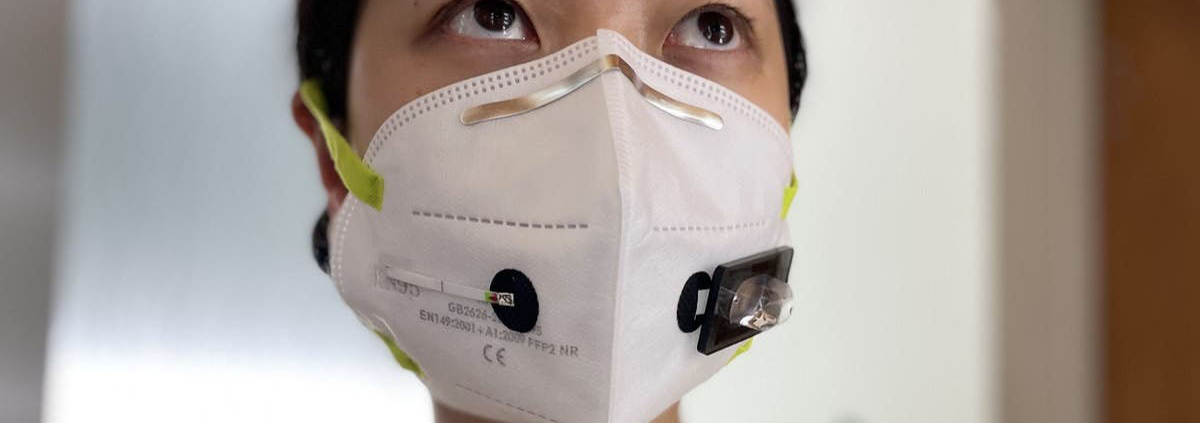
Engineers at MIT and Harvard University have designed a novel face mask that can diagnose the wearer with Covid-19 within about 90 minutes. The masks are embedded with tiny, disposable sensors that can be fitted into other face masks and could also be adapted to detect other viruses.

The sensors are based on freeze-dried cellular machinery that the research team has previously developed for use in paper diagnostics for viruses such as Ebola and Zika. In a new study, the researchers showed that the sensors could be incorporated into not only face masks but also clothing such as lab coats, potentially offering a new way to monitor health care workers’ exposure to a variety of pathogens or other threats.

Release date: 28 Jun 2021
Source: Massachusetts Institute of Technology

When did the first COVID19 case arise - تاریخ تولد ویروس منحوس

Evidence is building that its origin as a zoonotic spillover occurred prior to the officially accepted timing of early December, 2019. The first case of Covid likely arose between early October and mid November 2019 in China, earlier than officially reported.

The origins of the ongoing Covid-19 pandemic remain unclear. The first officially identified case occurred in early December 2019. Yet, this research published by PLOS Pathogens supports growing evidence that the Covid-19 pandemic arose sooner and grew more rapidly than officially reported.

Release date: 25 Jun 2021
Source: University of Kent