Public Health

Upward curve at tip eases motion but may lead to weaker muscles problems - قوس قدامی کفش ممکن است برای سلامت پا مناسب نباشد

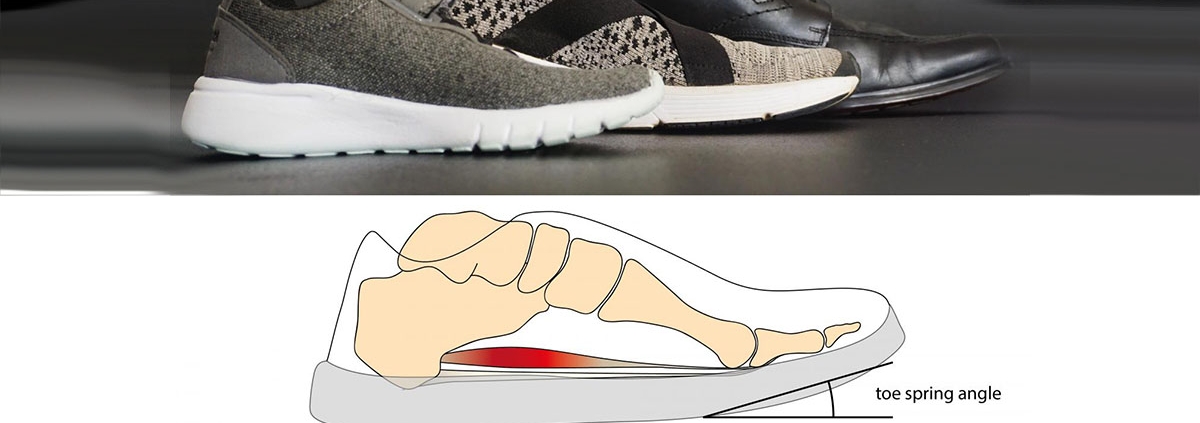
The toes of most shoes, especially sneakers, bend ever so slightly upward. While that curve, called a toe spring, can make walking easier and more comfortable, it may also weaken feet and potentially open them up to some common (and painful) foot-related problems.

That’s the conclusion reached by Harvard evolutionary biologist Daniel E. Lieberman, his former undergraduate student Oliver B. Hansen ’19, and two former postdoctoral researchers, Freddy Sichting and Nicholas B. Holowka, who studied toe springs and their effect on the biomechanics of walking.

The scientists found that the more curved a toe spring is, the less power the foot inside the shoe has to exert when pushing off from the ground while walking. That means foot muscles are doing less work, and this, the researchers hypothesize, may have consequences.

“It stands to reason that if the foot muscles have to do less work, then they’re probably going to have less endurance given that many thousands of times a day you push off on your toes,” said Lieberman, the Edwin M. Lerner II Professor of Biological Science and senior author on the paper. The work on toe springs is described in Scientific Reports.

The researchers say this potential weakness could make people more susceptible to medical conditions like plantar fasciitis — a common, hard to repair, and painful inflammation of the thick, web-like band of tissue that connects the heel bone to the toes.

Release date: 17 September 2020
Source: Harvard University
Potential COVID-19 drug azithromycin may increase risk for cardiac events - آزیترومایسین می تواند عوارض قلبی به دنبال داشته باشد

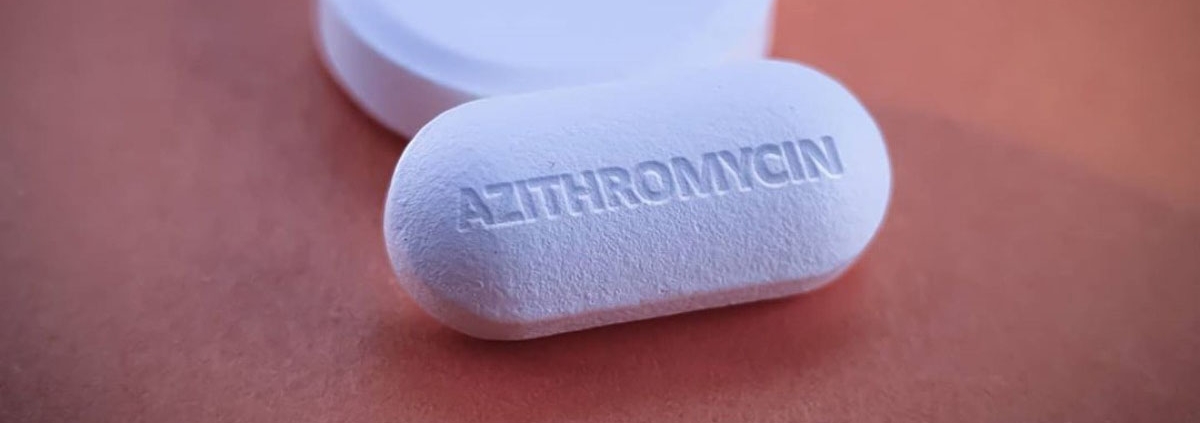
Azithromycin — a commonly-prescribed antibiotic — also is being investigated as a potential treatment for COVID-19. Azithromycin’s association with cardiac events also has been debated. In 2012, the FDA issued a warning for azithromycin stating that it had been linked to cardiac events, but subsequent studies have yielded mixed results.

Now, researchers from the University of Illinois Chicago have found that azithromycin by itself is not associated with an increase in cardiac events; however, if the drug is taken with certain other drugs that affect the electrical functioning of the heart, then cardiac events increased.

“Our findings should give researchers and clinicians looking at azithromycin as a potential treatment for COVID-19 pause,” said Haridarshan Patel, a researcher in the department of pharmacy systems, outcomes and policy at the UIC College of Pharmacy and corresponding author on the paper. “We found that if taken together with drugs that affect the electrical impulses of the heart, the combination is linked with a 40% increase in cardiac events, including fainting, heart palpitations and even cardiac arrest.”

Drugs that affect the electrical impulses of the heart, specifically the interval in the electrical rhythm called the QT interval, are called QT-prolonging drugs. These drugs include blood pressure medications such as ACE inhibitors and beta-blockers, some antidepressants, anti-malaria drugs such as hydroxychloroquine and chloroquine, opioid medications and even muscle relaxers.

“Because QT-prolonging drugs are used so commonly, our findings suggest that doctors prescribing azithromycin should be sure that patients are not also taking a QT-prolonging drug,” Patel said.

In a previous study, Patel and colleagues found that one in five people prescribed azithromycin also were taking a QT-prolonging drug.

Release date: 16 September 2020
Source: University of Illinois at Chicago

The Key to Happiness Friends - کلید شادی شما در دست دوستان شماست

Think spending time with your kids and spouse is the key to your happiness? You may actually be happier getting together with your friends, said SMU psychology professor Nathan Hudson.
Release date: 15 September 2020
Source: Southern Methodist University

Evaporation Critical to Coronavirus Transmission as Weather Changes - تاثیر آب و هوا در انتشار کرونا
As COVID-19 cases continue to rise worldwide, it is increasingly urgent to understand how climate impacts the continued spread of the coronavirus, particularly as winter virus infections are more common and countries in the northern hemisphere will soon see cooler temperatures.
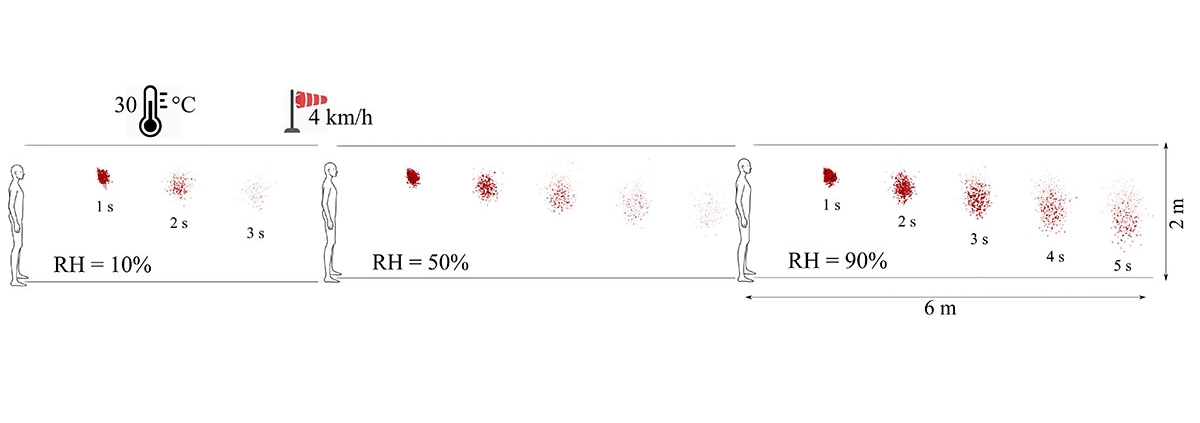
In a paper in Physics of Fluids, by AIP Publishing, researchers studied the effects of relative humidity, environmental temperature, and wind speed on the respiratory cloud and virus viability. They found that a critical factor for the transmission of the infectious particles, which are immersed in respiratory clouds of saliva droplets, is evaporation.
Release date: 22 September 2020
React better to both negative and positive events with more sleep - خواب مناسب شبانه باعث واکنش بهتر فرد به اتفاقات روزانه می شود
New research from UBC finds that after a night of shorter sleep, people react more emotionally to stressful events the next day—and they don’t find as much joy in the good things. The study, led by health psychologist Nancy Sin, looks at how sleep affects our reaction to both stressful and positive events in daily life.
Release date: 15 September 202
Insomnia identified as a new risk factor for type 2 - بی خوابی خطر ابتلا به دیابت را افزایش می دهد
A new ‘global atlas’ study published in Diabetologia (the journal of the European Association for the Study of Diabetes [EASD]) is the first to identify insomnia as a risk factor associated with increased risk of developing type 2 diabetes (T2D). The study identifies 34 risk factors that are thought to increase (19) or decrease risk (15), as well as a further 21 ‘suggestive’ risk factors where evidence was not quite as strong.
Release date: 8 September 2020
New approach against Parkinson’s disease through stem cell research - سلول های بنیادی به کمک درمان پارکینسون می آیند
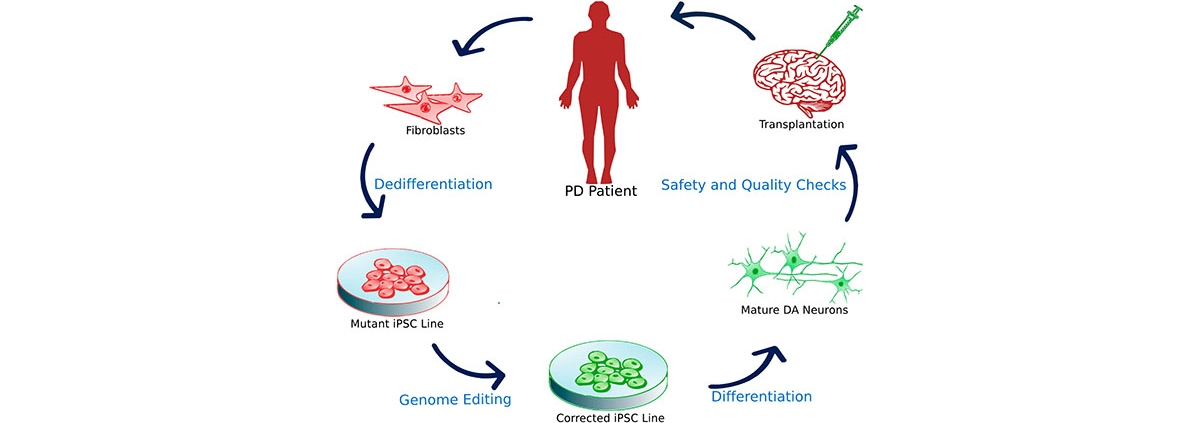
The Luxembourg Centre for Systems Biomedicine (LCSB) of the University of Luxembourg, experimented on patient-based cell cultures in the laboratory. The new combination of active substances they identified will have to undergo clinical trials before they can be used to treat patients. The research team published its results today in the prestigious scientific journal Science Translational Medicine.
Release date: 10 September 2020
Fatter legs linked to reduced risk of high blood pressure - چاقی پا یک فاکتور محافظت کننده در برابر فشار خون بالاست
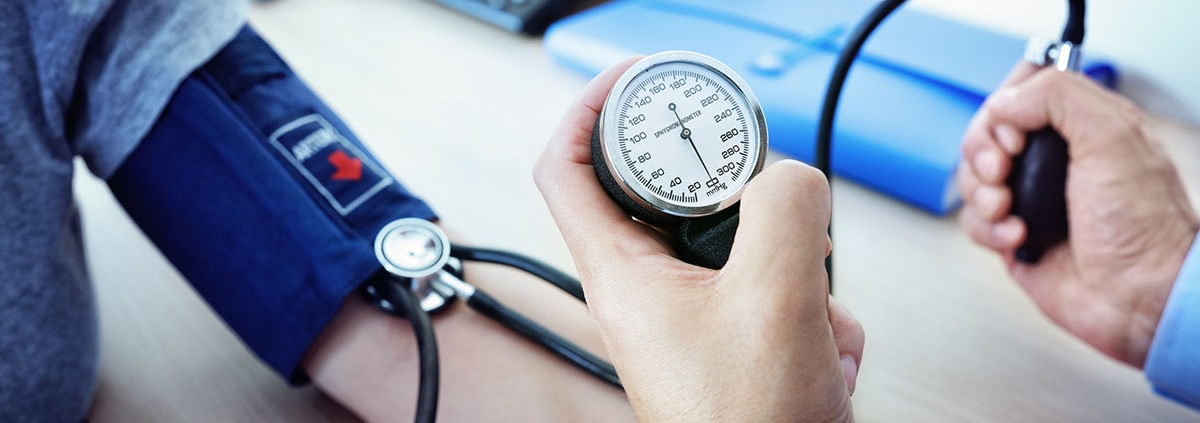
Adults with a higher percentage of fat tissue in their legs were less likely than those with a lower percentage to have high blood pressure.
Research findings held true even after adjusting for age, sex, race and ethnicity, education, smoking, alcohol use, cholesterol levels and waist fat, although to a lesser degree.
Researchers speculate that this protection offered by a higher percentage of leg fat could help identify those at low risk of high blood pressure, or alternatively serve as a target for prevention efforts, although more studies are needed.
Release date: 10 September 2020
Impact of ACE-i and ARBs for patients with COVID-19 - تاثیر داروهای ضدفشارخون بر کووید19
Low blood pressure, or hypotension, in COVID-19 patients with a history of hypertension appears to be a risk factor for kidney damage and death.
Reducing hypertension medications if and when COVID-19 patients become hypotensive could prevent acute kidney injury and death, according to a new study.
COVID-19 patients previously taking the blood pressure-lowering drugs angiotensin-converting enzyme inhibitors (ACE-i) and angiotensin receptor blockers (ARBs) are more likely to die than those who were not taking the medications.
It is important to note that patients taking ACE-i and/or ARBs may have more advanced cardiovascular disease or other chronic health conditions that further increase the risk for serious complications of COVID-19.
Release date: 10 September 2020

Source: American Heart Association

Stronger bones thanks to heat and microbiota - تاثیر آب و هوا بر پوکی استخوان
Osteoporosis, a bone disease linked to ageing, is characterised by a loss of bone density, micro-architectural deterioration of the bones and an increased risk of fractures. With one third of postmenopausal women affected, it is a major public health problem. Through epidemiological analyses, laboratory experiments and state-of-the-art metagenomic and metabolomics tools, a research team has observed that exposure to warmer ambient temperatures (34 °C) increases bone strength, while preventing the loss of bone density typical of osteoporosis. Moreover, this phenomenon, linked to a change in the composition of gut microbiota triggered by heat, could be replicated by transplanting the microbiota of mice living in a warm environment to mice suffering from osteoporosis. Indeed, after the transplant, their bones were stronger and denser. These results, to be discovered in Cell Metabolism, make it possible to imagine effective and innovative interventions for prevention and treatment of osteoporosis.
Release date: 10 September 2020

Source: Université de Genève